A seminar on managing edible invasive marine species is taking place in Heraklion on Thursday, 12 November from 09:00 to 15:00 at the Markos Karanastasis auditorium of the Hellenic Mediterranean University in Estavromenos. The Region of Crete and the Experimental Tourism Vocational Training Institute of Crete organised the event.
The link between sea, fisheries and gastronomy
The session on gastronomy and marine conservation linked ecosystem protection with the needs of commercial fishers. The region wants to examine how edible non-native and invasive species might be sold locally when they are suitable and safe to eat.
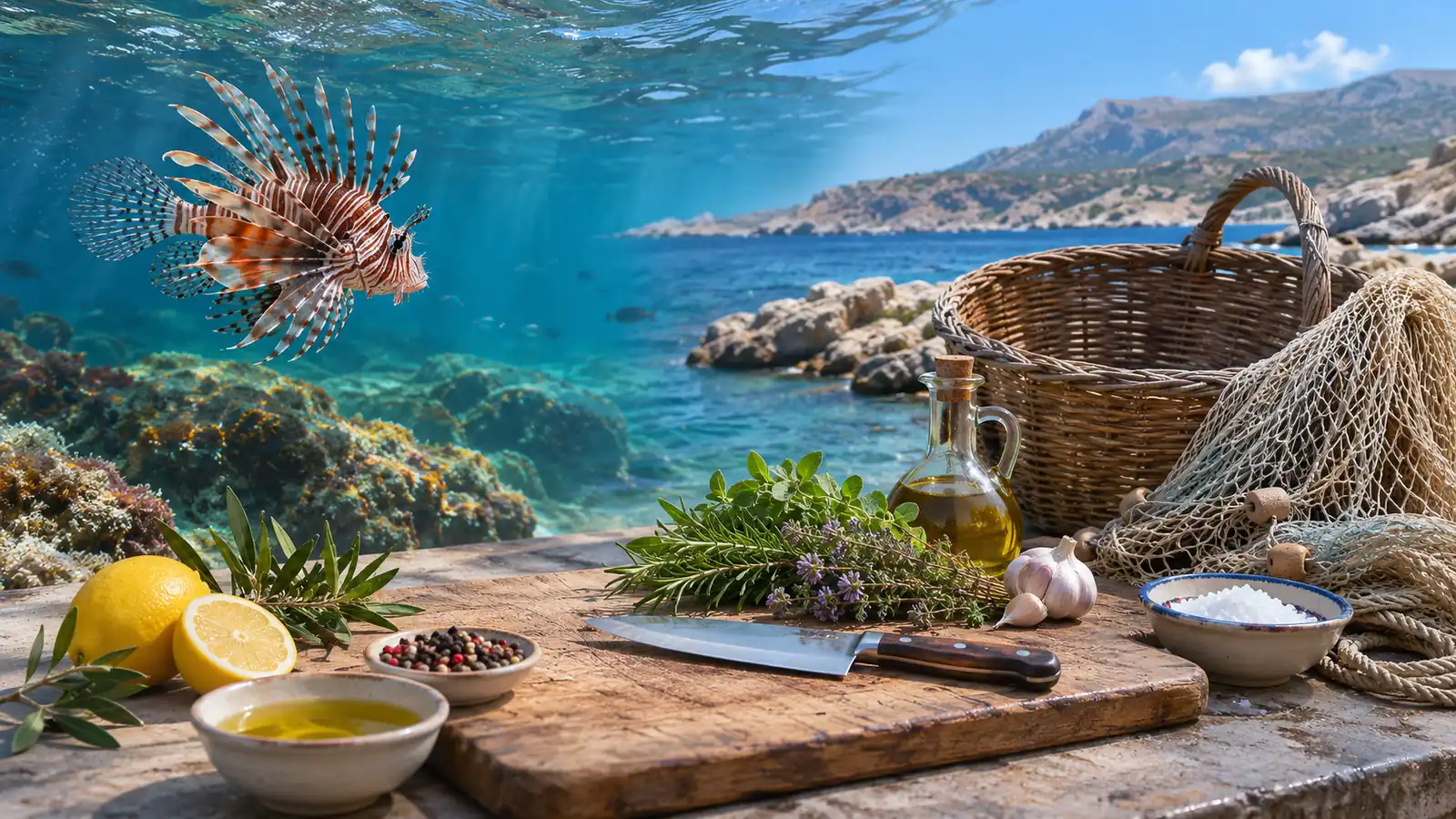
Special reference is made to the lionfish, a species that has spread to the Mediterranean and exerts pressure on marine biodiversity. Its culinary use is presented as a possible supplementary option for fishermen rather than an automatic solution to the ecological problem, which requires monitoring and organised management.
The initiative is part of the European SEA4FUTURE project and is linked to the distinction of Crete as the Gastronomic Region of Europe for 2026. The Region seeks to highlight a practical relationship between sustainable gastronomy, conservation of fishery resources and local entrepreneurship.
The programme of the conference in ELMEPA
Scientists and professionals from fishing, nutrition and catering are scheduled to speak. Chef Stelios Miliarakis will give a presentation, followed by an invasive-species cooking workshop with instructors and students from Crete’s experimental tourism training institute.
The event also includes the partners of SEA4FUTURE Ecological Institute and Ethic Ocean. The aim of the workshop is to exchange documented knowledge between fishermen, researchers and gastronomy professionals, so that any use of the species can go hand in hand with food safety and the protection of marine life.
The accompanying image was created with artificial intelligence and is indicative. It is not a photo of today's event, the ELMEPA or a specific fishery product.