
On Thursday, 12 November the Region of Crete announced a further extension of preventive measures against sheep and goat pox. They will apply from Friday 13 to Thursday 26 November 2026, after which veterinary authorities will reassess them.
According to official update of the Region of Crete, the island remains without a confirmed case of the disease. The extension is attributed to the increase in cases in mainland Greece and the need to limit the risk of the virus entering the livestock of Crete.
What applies to animal movements
Movements of ovine and caprine animals for slaughter are allowed throughout Crete. For breeding they are limited within the same Regional Unit, while movements to winter pasture are still allowed on the island under the conditions provided for.
The ban on the entry of sheep and goats from holdings in the rest of Greece remains in force. The simultaneous transport of animals from different farms is also prohibited. Each movement requires a health certificate, an appropriate disinfected vehicle and a clean destination facility. Newly introduced animals are predicted to remain quarantined for 21 days.
The measures within the farms
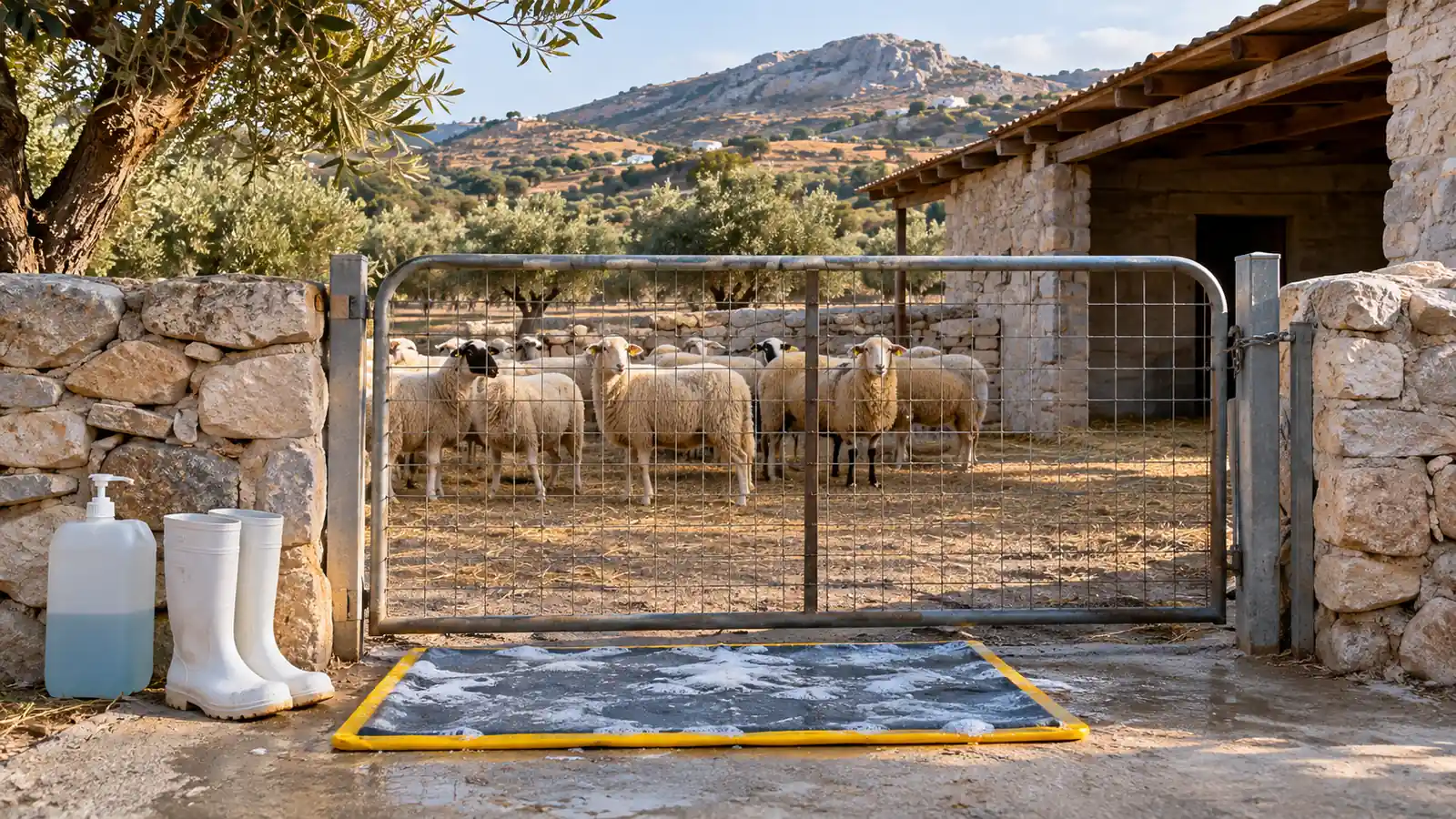
Farmers are invited to keep the entrances of the premises under control, to use disinfectant carpets or moats and to limit unnecessary visits. A separate quarantine area for suspected or newly introduced animals, control of feed origin and daily monitoring of possible symptoms are still envisaged.
Specific obligations apply to slaughterhouses, cheese farms, milk establishments and feed carriers. Among other things, thorough vehicle disinfection and complete accompanying documents are required. The public page of the Ministry of Rural Development collects national directives and decisions on sheep and goat pox.
The current local report of Nea Kriti confirms the new period of validity and the basic restrictions. The communication concerns preventive protection of livestock farming; it does not document a case on the island.
The accompanying image was created with artificial intelligence and is indicative. It does not depict actual breeding, control or case of disease.